
Products

The lingerie landscape is shifting toward structural permanence. While disposable fabrics and standard silicone shapes dominate the mass market, a highly specialized segment has quieted the noise by introducing rigid architecture to intimate apparel. Metal nipple covers represent this paradigm shift, offering a level of concealment that flexible alternatives simply cannot replicate. For women seeking absolute opacity under heavy satin, structured corsetry, or sheer couture, these engineered discs provide an uncompromising barrier. Unlike traditional adhesive options that degrade after several washes, metal nipple covers offer a reusable, premium alternative that treats concealment as an art of precision engineering.
At their core, metal nipple covers are ultra-thin, contoured shields designed to offer maximum concealment without adding bulk. Unlike conventional silicone variants or paper-thin non-woven disposables, these covers utilize high-grade, rigid metals. Manufacturers typically select medical-grade stainless steel, polished brass, or specialized hypoallergenic alloys. These materials are chosen for their structural integrity, ensuring that the cover maintains its precise curvature regardless of external pressure.
The structural variance creates a profound difference in execution. Traditional silicone conforms entirely to the natural shape of the body, which occasionally fails to mask sharp contours under tight or highly reflective fabrics. Metal, conversely, acts as a smooth, micro-thin facade. It creates a completely uniform surface, suspended just over the apex of the breast. The stability of the adhesive under mechanical stress is a primary focus, ensuring these weighted metallic discs remain perfectly centered without shifting or stretching the delicate skin beneath them.
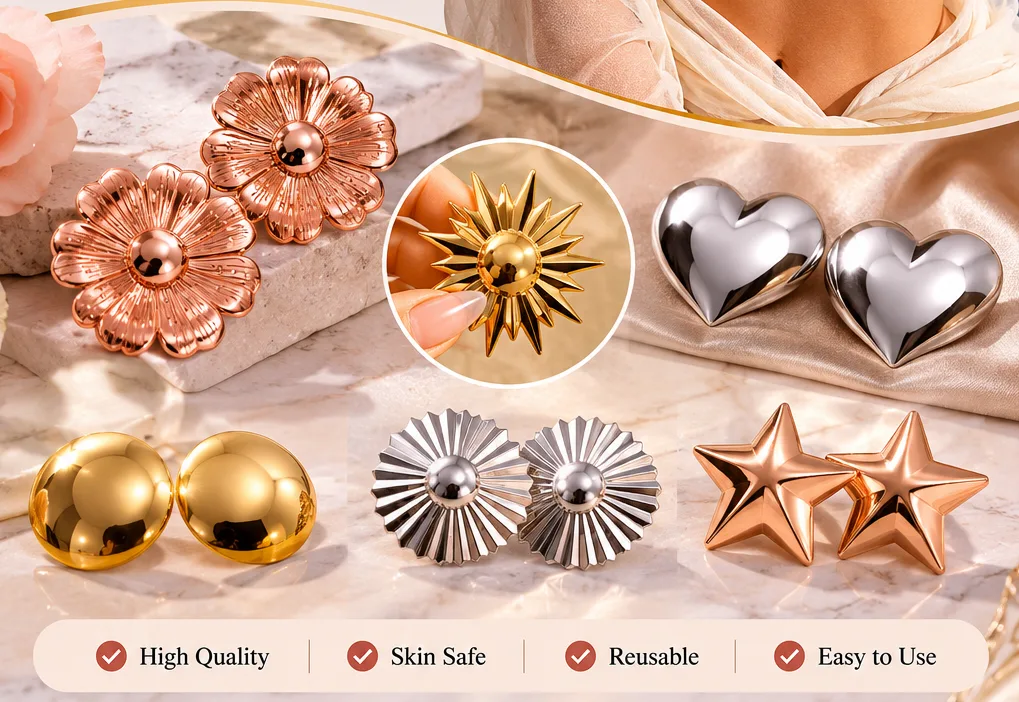
The primary advantage of choosing a metallic composition lies in its absolute light obstruction. Under intense studio lighting, flash photography, or direct sunlight, standard fabric and thin silicone patches can become translucent, betraying the very modesty they were meant to protect. Metal possesses zero light transmission, guaranteeing a completely opaque profile under the most demanding wardrobe conditions.
Furthermore, longevity sets this category apart. While typical adhesive bras face a gradual decline in structural integrity, a metal core cannot warp, tear, or lose its shape. It resists the natural degradation caused by body heat and sweat. This structural permanence makes it a highly sustainable choice for consumers looking to invest in a long-term wardrobe tool. The metal shield distributes fabric pressure evenly across its surface, eliminating the dimpling or lifting edges common with soft-edge adhesives.
Placing raw metal against sensitive skin requires rigorous material science. High-quality metal nipple covers are rarely composed of elemental metal alone; they are treated with sophisticated biocompatible coatings or lined with protective barriers. The medical-grade stainless steel often utilized in these products naturally resists bacterial growth, making it exceptionally hygienic compared to porous foam alternatives.
| Material Type | Primary Benefit | Sensitivity Risk | Care Complexity |
|---|---|---|---|
| Surgical Stainless Steel | High durability, naturally hygienic | Extremely low | Very low |
| Polished Brass Alloy | Rigid structure, lightweight | Moderate (if nickel is present) | Medium |
| Hypoallergenic Coated Aluminum | Ultra-lightweight, seamless feel | Low | Low |
Dermatological safety hinges on the absence of common allergens. Nickel, a frequent culprit in contact dermatitis, must be strictly excluded from production. For individuals with known metal sensitivities, verifying the use of certified nickel-free alloys or medical-grade titanium finishes is crucial. When executed properly, the cool temperature of the metal quickly acclimates to body heat, offering a soothing, non-reactive experience that reduces the friction-induced chafing sometimes caused by moving fabric.
Securing a metal shield to the body involves a hybrid design. The perimeter or back surface is typically integrated with a thin layer of skin-safe, medical-grade silicone or compatible liquid adhesive. To apply, the skin must be completely free of oils, powders, and moisture. Pressing the center of the cover against the apex and smoothing outward ensures the adhesive seal engages fully, leveraging the rigidity of the frame to create stable placement.
Maintaining these precision items requires minimal yet specific effort. After removal, the adhesive layer should be washed gently with mild, oil-free soap and lukewarm water, avoiding any abrasive brushes that could scratch the metallic plating or compromise the sticky surface. The metal exterior can be wiped clean with a soft microfiber cloth to maintain its luster. Once air-dried away from direct sunlight, storing them in their original contoured casing prevents dust accumulation and protects the structural dome from accidental compression. This simple routine preserves the integrity of your premium metal nipple covers for years to come.
Curious about our quality? Request your free samples of nipple covers and sticky bras today. As a dedicated manufacturer, we provide unbeatable factory-direct pricing and service to ensure your brand’s success.

Dsaky
INQUIRY