
Products

The modern wardrobe demands invisible support. Backless dresses and sheer fabrics have pushed traditional lingerie aside, making adhesive alternatives a daily necessity for millions.
Yet, as breathability is traded for seamless aesthetics, a critical question arises for conscious consumers: are silicone nipple covers safe for prolonged daily wear?
Skin is a living, breathing organ. Placing a non-porous barrier directly over the delicate breast tissue alters the local microclimate, creating unique dermatological challenges.
Understanding the interaction between synthetic polymers and human epidermis is essential. It is the only way to enjoy wardrobe freedom without sacrificing skin health.
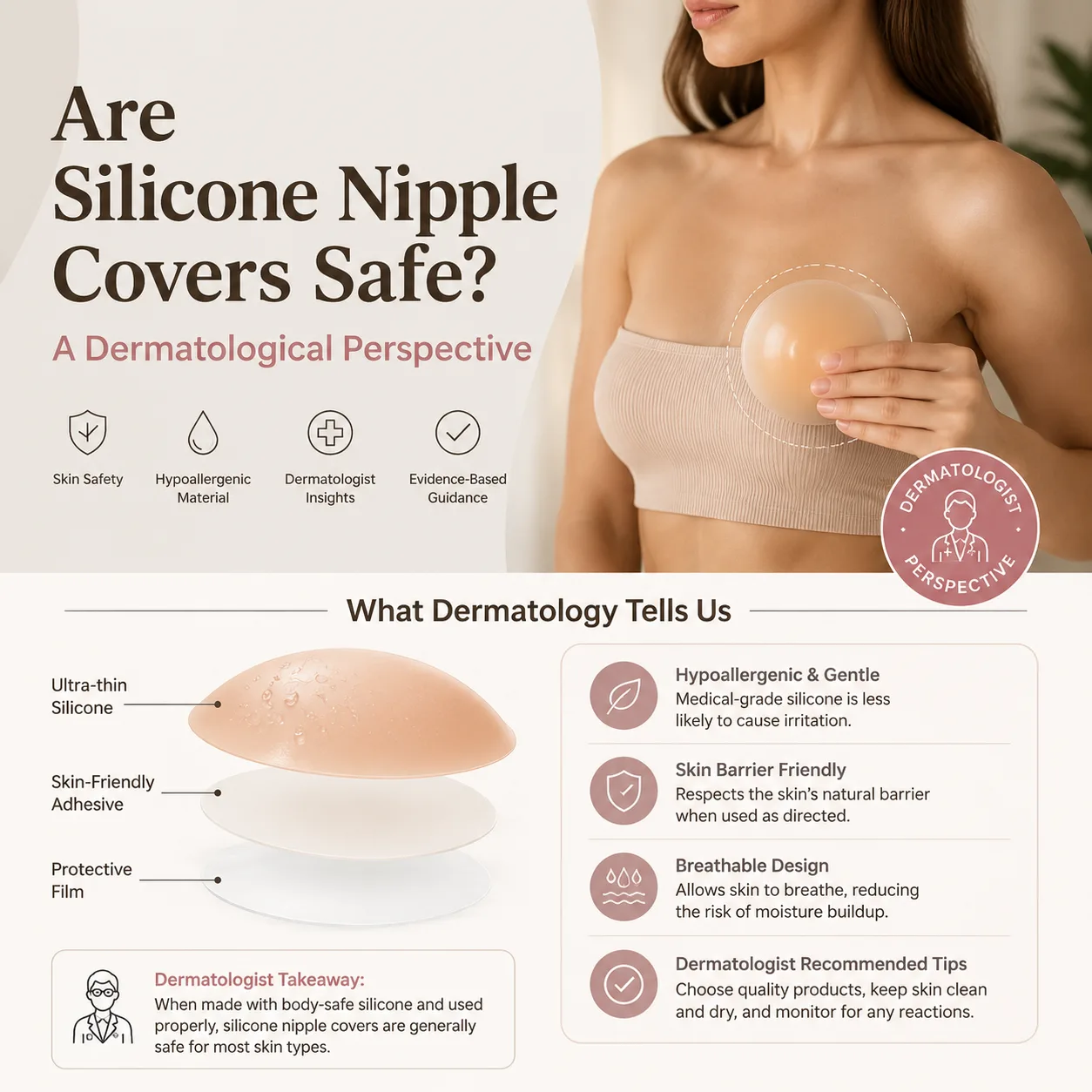
Not all polymers are created equal. The market is flooded with cheap alternatives that look identical to premium products but behave quite differently on the skin.
Standard silicone often contains fillers and chemical plasticizers. These compounds can leach out over time, especially when exposed to body heat and natural skin oils.
For us, utilizing pure, medical-grade silicone from certified global suppliers is the only acceptable standard. This material is inherently inert and biocompatible.
| Feature | Medical-Grade Silicone | Standard Silicone |
|---|---|---|
| Biocompatibility | High (Hypoallergenic) | Variable (Low control) |
| Chemical Fillers | Zero Fillers | Often Present |
| Heavy Metals | None Detected | Potential Traces |
| Skin Breathability | Occlusive but Stable | Can Cause Irritation |
Medical-grade variants undergo rigorous biocompatibility testing to ensure they do not cause tissue reactivity. They are designed to coexist peacefully with sensitive human skin.
When low-grade polymers sit against the skin, the risk of chemical sensitization increases. What seems like an economical choice can quickly lead to dermatological discomfort.
Investing in high-purity materials protects the skin barrier. It ensures that the invisible freedom of modern fashion does not come at a painful cost.
When redness or itching occurs, the blame is often misplaced on the silicone itself. True allergic reactions to pure silicone are exceedingly rare in clinical dermatology.
The actual culprit is almost always the adhesive layer. Lower-end products frequently utilize industrial-grade acrylics that are far too aggressive for the breast’s thin skin.
We address this risk by sourcing specialized, hypoallergenic glues like Germany Wacker adhesive. These advanced formulations provide secure stickiness without triggering aggressive immune responses.
Beyond the chemical composition of the glue, mechanical factors play a massive role. The human body constantly regulates temperature through sweat production.
Silicone forms a completely occlusive seal over the skin. When sweat becomes trapped beneath this dense barrier, it creates a hyper-hydration state.
This trapped moisture softens the stratum corneum, the skin’s outermost protective layer. Once softened, the skin becomes highly vulnerable to friction and bacterial overgrowth.
Prolonged moisture entrapment can lead to miliaria, commonly known as sweat rash. It can also cause irritant contact dermatitis, characterized by red, angry patches.
The risk multiplies exponentially for full-figured individuals. Larger busts generate more natural heat and localized friction throughout a standard day of movement.
Developing specialized, plus-size silicone bras requires a delicate balance. The adhesive must be strong enough to support weight, yet gentle enough to prevent tearing.
Removing a strong adhesive from compromised, sweat-softened skin can cause micro-tears. These tiny epidermal breaks are entry points for superficial skin infections.
Safe usage is rooted in understanding behavioral limitations. Even the highest quality, medical-grade products require disciplined application and hygiene protocols to remain safe.
First, wear time must be strictly managed. Dermatologists generally recommend a maximum of six to eight hours of continuous wear per session.
Giving the skin a chance to breathe and recover is vital. Constant occlusion disrupts the natural shedding cycle of dead skin cells.
Application Checklist for Maximum Safety:
1. Cleanse skin with a mild, oil-free soap.
2. Dry the area completely before application.
3. Avoid applying lotions, powders, or perfumes.
4. Gently peel from the outer edge inward.
5. Wash the covers immediately after removal.
Proper cleansing of the adhesive surface is non-negotiable. Dead skin cells, sebum, and environmental dust accumulate on the sticky gel after every single wear.
If these organic residues are not washed away, they become breeding grounds for bacteria. Applying a contaminated cover back onto the skin invites infection.
Use lukewarm water and a tiny drop of neutral, fragrance-free soap. Avoid harsh detergents or scrubbing brushes that can degrade the specialized adhesive matrix.
Air drying in a dust-free environment preserves the stickiness. Once dry, replacing the protective plastic film prevents airborne contaminants from settling on the surface.
Never apply adhesive covers over sunburned, broken, or irritated skin. Doing so traps bacteria inside a wounded area, drastically accelerating localized inflammation.
If you experience persistent redness, swelling, or blistering, stop usage immediately. Consult a dermatologist to determine if you have developed a specific adhesive allergy.
Ultimately, high-quality silicone nipple covers are safe when craftsmanship meets informed ownership. Treat them as intimate medical-grade accessories, and your skin will remain perfectly healthy.
Curious about our quality? Request your free samples of nipple covers and sticky bras today. As a dedicated manufacturer, we provide unbeatable factory-direct pricing and service to ensure your brand’s success.

Dsaky
INQUIRY