
Products

The invisible architecture of modern fashion relies heavily on the discreet support of adhesive lingerie. To maintain this invisible support, understanding how to clean sticky bra surfaces effectively is essential. The delicate relationship between skin-safe polymers and the human body requires precise maintenance. Proper care ensures longevity, performance, and hygiene. A premium backless bra represents a fusion of material science and design, where longevity is determined entirely by how the adhesive is treated after exposure to the skin.
Every wear subjects the adhesive layer to microscopic debris. Sebum, dead skin cells, ambient dust, and perspiration accumulate on the surface, creating a barrier between the medical-grade silicone and your body. This accumulation compromises the surface tension required for secure adhesion. Regular maintenance is not merely about hygiene; it is a technical necessity that reactivates the polymer chains.
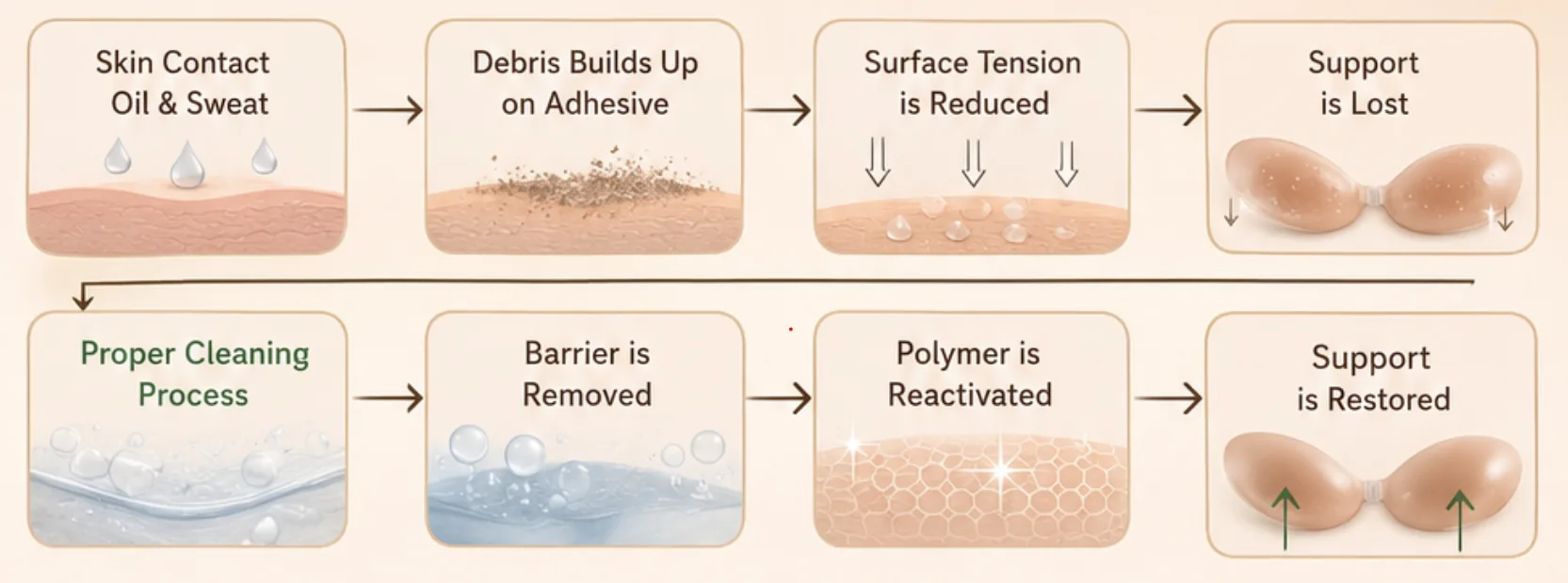
Failing to remove these impurities causes them to become permanently embedded in the adhesive matrix. Over time, this degradation reduces the lifespan of the product. Proper cleansing restores the tackiness of the adhesive, ensuring the bra performs reliably during subsequent wears. For specialized items like a plus-size silicone bra, maintaining adhesive integrity is critical, as the material bears greater mechanical load and distribution demands.
Effective cleaning requires specific, non-reactive agents that protect the specialized adhesive formula.
Critical Caution: Never use hand soaps, dish liquids, or body washes that contain moisturizers, essential oils, or heavy fragrances. These ingredients leave a microscopic film over the adhesive surface, permanently neutralizing its ability to bond with the skin.
Begin by assessing the adhesive surface under direct, clear lighting. Identify any large lint particles, hair, or visible debris that may have adhered to the perimeter. Do not attempt to scrape these off dry. Instead, prepare to lift them gently once the surface is lubricated with water.
Wet the cups thoroughly with lukewarm water. Apply a few drops of the oil-free cleanser directly onto the adhesive layer.
Using the pads of your fingers, move in gentle, concentric circular motions. Avoid using fingernails, brushes, or abrasive sponges, as any sharp contact can puncture or tear the delicate adhesive film.
Hold the cups under a gentle stream of running lukewarm water. Rinse thoroughly until all traces of soap residue are gone. The water should run completely clear off the surface. Any leftover detergent will dry into a dull film, preventing the bra from sticking properly during its next use.
The drying phase is where the restoration of the adhesive occurs. Never use a towel, microfiber cloth, or tissue to dry the adhesive surface. The friction will transfer thousands of tiny fibers onto the glue, rendering the bra unusable.
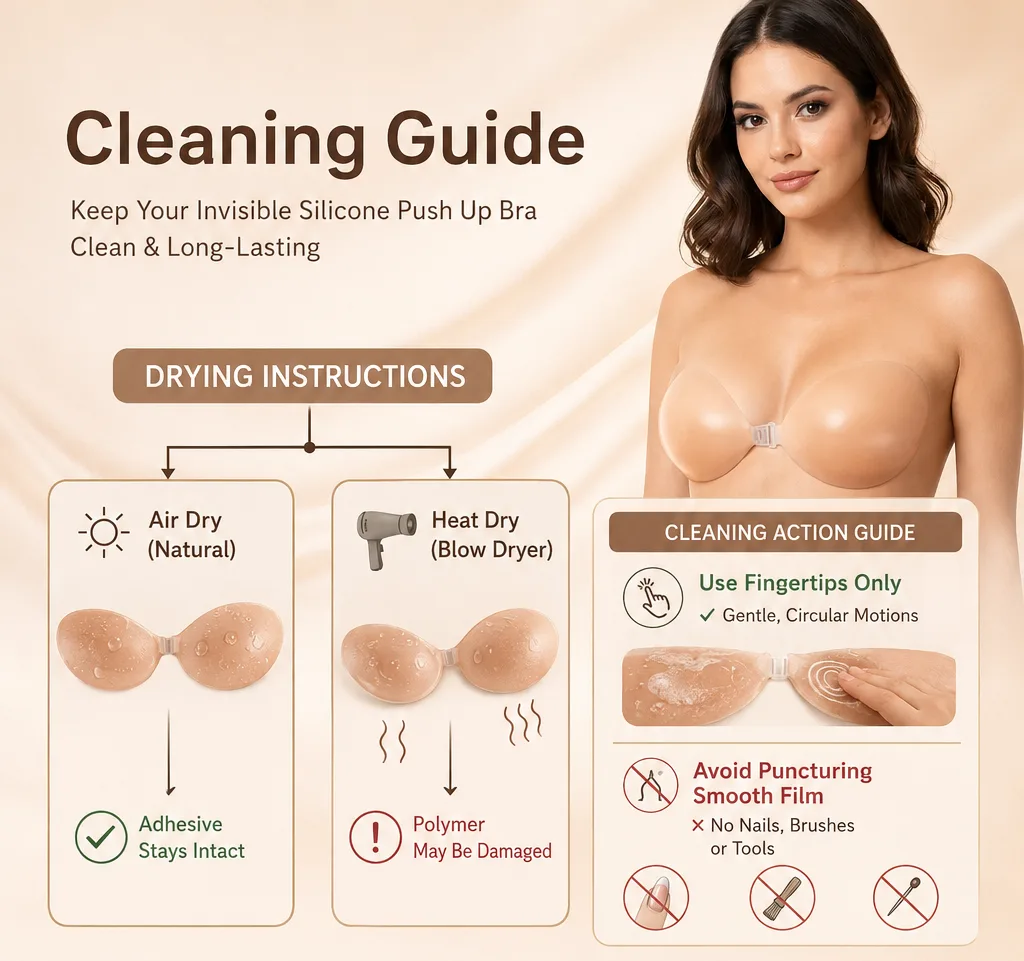
Similarly, avoid using the hot setting of a hairdryer. High heat distorts the molded shape of the cups and degrades the adhesive formulation. Instead, place the bra adhesive-side up on a clean, flat drying rack in a well-ventilated indoor space. As the water evaporates, the surface will naturally regain its original tackiness.
Once the bra is completely dry, it must be shielded from the open air. Dust settles continuously, and an exposed adhesive surface acts as a magnet for airborne particles.
Reapply the original protective plastic film that accompanied the packaging. If the original film is unavailable, a clean sheet of clear polyethylene film serves as an excellent alternative. Store the bra inside its original box to preserve its molded shape and prevent the cups from being crushed or creased by other garments.
No. The mechanical agitation of a washing machine, combined with the friction of other fabrics, will permanently tear the adhesive layer and distort the structural integrity of the cups.
You should clean your adhesive bra after every single wear. Even during short periods of use, skin oils and microscopic debris accumulate on the surface, requiring prompt removal.
First, verify that the surface is completely dry, as even minor moisture prevents adhesion. If it remains slick after drying, the adhesive may have reached the end of its functional lifespan or suffered irreversible damage from improper storage. Knowing how to clean sticky bra surfaces correctly from day one is the most effective way to prevent premature degradation.
No. Moisturizing agents contain lipids and oils designed to deposit onto surfaces. These compounds coat the adhesive layer, creating a permanent barrier that eliminates stickiness. Always use a plain, clear, oil-free liquid soap.
Curious about our quality? Request your free samples of nipple covers and sticky bras today. As a dedicated manufacturer, we provide unbeatable factory-direct pricing and service to ensure your brand’s success.

Dsaky
INQUIRY