
Products

In the lingerie manufacturing industry, especially in OEM and private label production, a well-prepared tech pack is essential for efficient communication between buyers and factories. For B2B clients working with manufacturers like Xinrui, a detailed tech pack ensures accurate sampling, faster production cycles, and consistent product quality. This article explains How to Prepare a Tech Pack for Custom Bras to support successful factory collaboration and scalable production.
A tech pack, or technical package, is a structured document that outlines every detail of a product before production begins. It acts as a blueprint for manufacturers, helping them understand the design, materials, construction, and quality requirements. Without a clear tech pack, miscommunication can lead to delays, increased costs, and inconsistent results, which are critical risks in OEM production.
Design Overview and Technical Drawings
The first step in preparing a tech pack is the design overview. This should include clear sketches or CAD drawings of the bra from multiple angles, such as front, back, and side views. These visuals should highlight important features including cup shape, strap placement, closures, and any special design elements. For B2B buyers, providing accurate and professional drawings reduces interpretation errors at the factory level.
Material Specifications and Component Details
Material specification is another key component. The tech pack should clearly define all materials used, including fabric types, lace, foam, underwire, elastics, hooks, and accessories. If the bra includes specialized components such as silicone inserts or adhesive layers, the type and quality grade must be specified. This is particularly important for OEM manufacturing, as material selection directly impacts cost, durability, and compliance with target market standards.
Sizing Charts and Measurement Guidelines
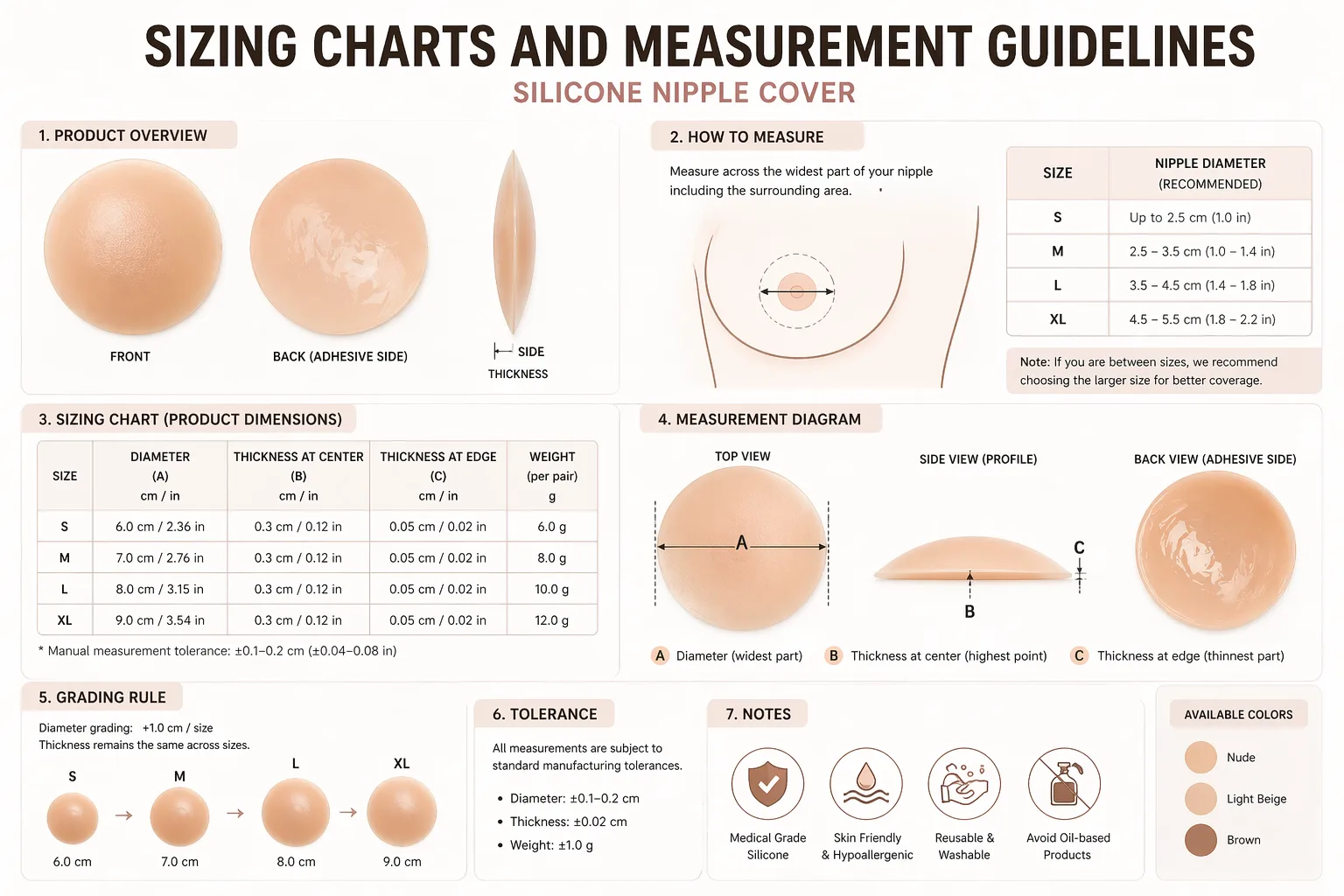
Sizing and measurement charts must be included in a structured format. This section should detail all dimensions for each size, including cup measurements, band length, strap width, and grading rules. Providing tolerances is also important to ensure production consistency. For manufacturers, precise sizing information reduces sampling revisions and ensures that bulk production meets expectations.
Construction Methods and Assembly Instructions
Construction details explain how the bra is assembled. This includes stitching methods, seam placement, bonding techniques, and reinforcement areas. For example, whether the bra uses molded cups, cut-and-sew construction, or seamless technology should clearly defined. Step-by-step notes or references can help the factory follow the intended production process accurately.
Color, Trims, and Labeling Requirements
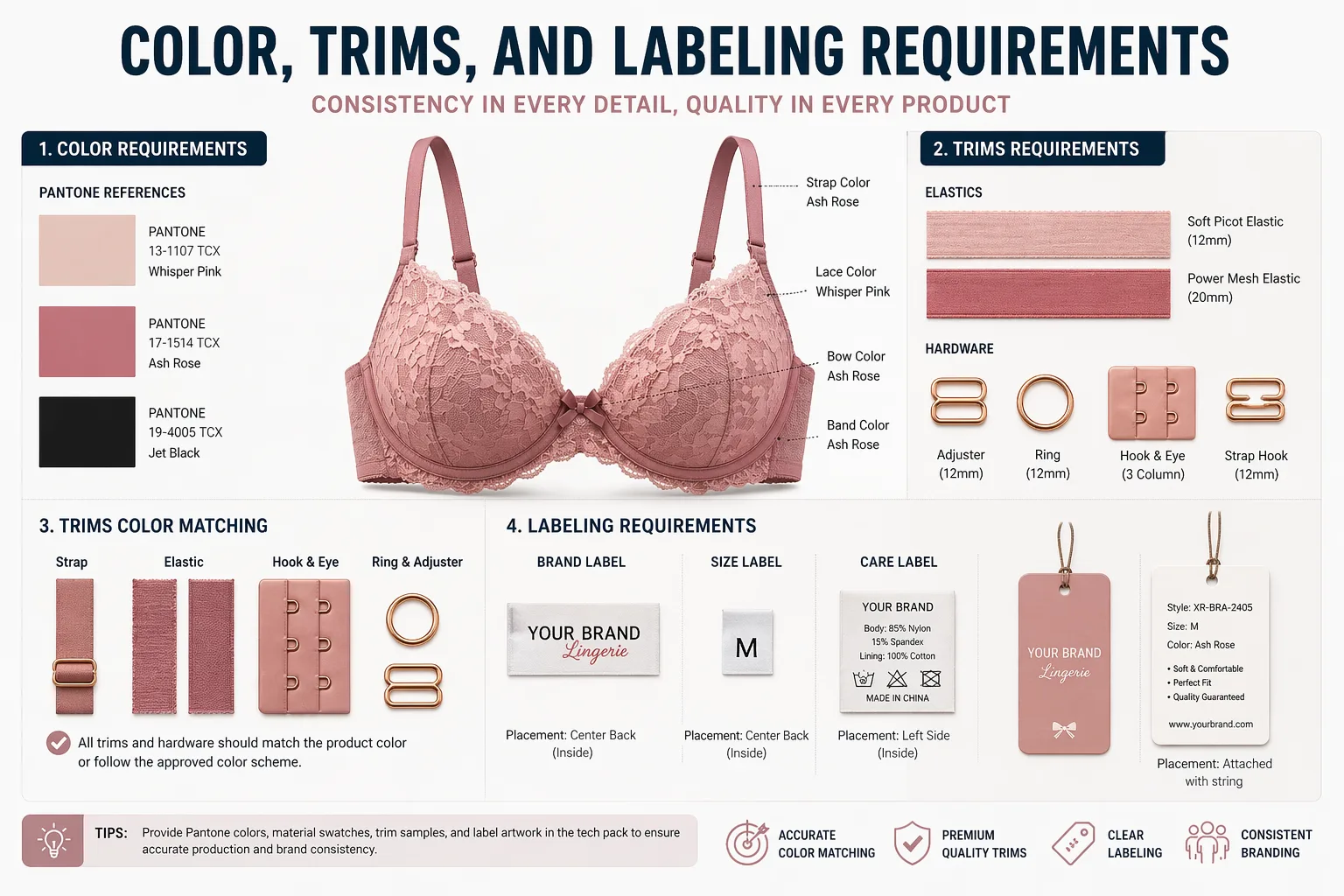
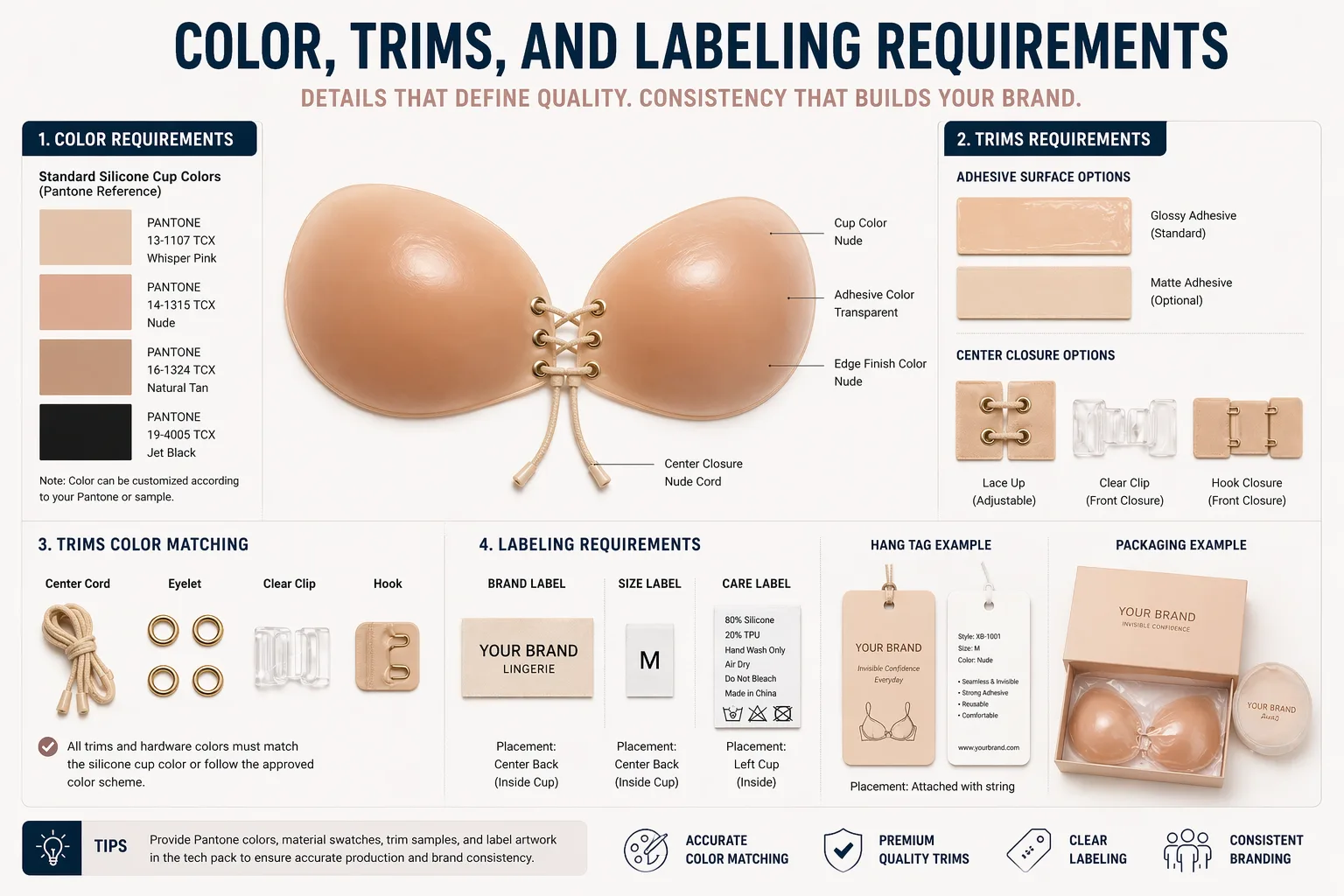
Color and trim details should also be clearly documented. Buyers should specify Pantone color codes, fabric dye requirements, and trim colors such as straps, elastics, and closures. This ensures color consistency across production batches. In addition, labeling requirements such as brand labels, care labels, and size tags should be included for private label projects.
Packaging and Branding Specifications
Packaging instructions are particularly important for OEM clients. The tech pack should specify packaging type, such as polybags, boxes, or custom retail packaging, along with labeling, barcode placement, and branding requirements. Clear packaging guidelines help manufacturers prepare products for direct shipment to distributors or retailers.
Quality Control and Compliance Standards
Quality control and testing requirements must defined in the tech pack. This includes standards for fit, durability, colorfastness, elasticity, and overall workmanship. For international markets, buyers should also include compliance requirements such as REACH, CPSIA, or other regional regulations. This ensures that the final product meets safety and legal standards in target markets.
Costing, MOQ, and Production Timeline
Costing and production expectations can also outlined to streamline communication. While pricing negotiations happen separately, including target price ranges, minimum order quantities, and expected lead times helps manufacturers provide more accurate quotations and production schedules.
Conclusion for B2B Buyers and OEM Partnerships
For B2B buyers, a well-structured tech pack is not just a document but a strategic tool. It improves efficiency, reduces risks, and builds stronger partnerships with OEM manufacturers. When working with experienced factories like Xinrui, a detailed tech pack enables smoother development, better quality control, and scalable production for global markets. In conclusion, preparing a comprehensive tech pack for custom bras is essential for successful OEM manufacturing and long-term business growth.
Curious about our quality? Request your free samples of nipple covers and sticky bras today. As a dedicated manufacturer, we provide unbeatable factory-direct pricing and service to ensure your brand’s success.

Dsaky
INQUIRY