
Products

The hidden architecture of lingerie design relies on a silent partnership between advanced polymer chemistry and human anatomy. When we strip away the lace and structural underwires, the adhesive bra stands out as a triumph of modern material science. Yet, the longevity of this engineering marvel depends on user habits. Knowing how to store sticky bra surfaces correctly is just as crucial as the formulation of the medical-grade silicone itself. For global brands and everyday consumers alike, improper preservation practices represent the single greatest cause of premature adhesive failure. Proper stewardship begins the moment the garment is removed from the skin.
Before a backless bra ever reaches its designated resting place, it must undergo a rigorous decontamination process. Sweat, sebum, and microscopic skin debris act as localized contaminants. If these elements remain trapped on the bio-gel surface during storage, they permanently compromise the polymeric matrix.
Begin by washing the cups with lukewarm water and a few drops of a mild, fragrance-free soap. Avoid dish detergents or soaps containing moisturizing oils, which leave a microscopic film that ruins stickiness. Gently use the palms of your hands to cleanse the surface; fingernails can tear the delicate adhesive layer.
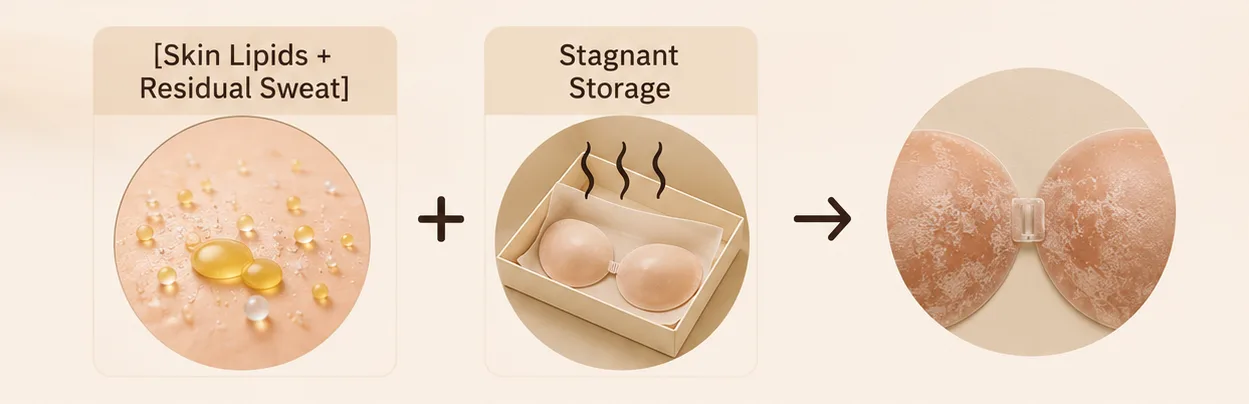
Once washed, the bra must air-dry completely. Never use a towel, tissue, or cloth, as lint will permanently bond to the adhesive. Suspend the bra in a dust-free indoor environment away from direct sunlight. Ultraviolet rays degrade both the structural TPU outer shell and the biological stickiness of the inner adhesive layer.
The original packaging of a premium adhesive bra is not mere marketing waste; it is a precisely calibrated preservation chamber. The molded plastic blister pod and the original protective film are engineered to match the exact curvature of the cups, preventing structural deformation.
For us, the stability of the adhesive under mechanical stress is a primary focus. Our integration of Germany Wacker hypoallergenic glue ensures a resilient bond, but even industrial-grade material science requires disciplined consumer storage habits to achieve its maximum lifespan.
Silicone is an exceptionally stable elastomer, but the specialized adhesives applied to it are highly sensitive to microclimatic fluctuations. The ideal storage environment is a cool, dark, and dry dresser drawer.
High ambient temperatures cause certain adhesive formulations to soften and migrate, leading to a gooey, uneven texture that loses its cohesive strength. Conversely, high humidity levels encourage moisture accumulation beneath protective films, creating a breeding ground for mold and mildew that destroys the hypoallergenic properties of the gel.
Consider the analogy of fine wine or mechanical watches: stability is the ultimate goal. Keep your storage spaces away from heating vents, bathroom medicine cabinets (where steam runs rampant), or window sills. By maintaining a stable, temperate environment, you ensure that the delicate balance of tackiness and skin-safe adhesion remains perfectly intact for dozens of subsequent wears.
Understanding the subtle nuances of how to store sticky bra products transforms a simple routine into an act of preservation. Whether dealing with standard silhouettes or complex backless support systems designed for full busts, the intersection of hygiene, physical shielding, and climate control determines the operational lifetime of the garment. Cultivate these habits, and your investment in invisible support will reward you with reliable performance season after season.
Curious about our quality? Request your free samples of nipple covers and sticky bras today. As a dedicated manufacturer, we provide unbeatable factory-direct pricing and service to ensure your brand’s success.

Dsaky
INQUIRY