
Products

Choosing the right undergarments often dictates how confident you feel in a backless dress or a plunging neckline. The sticky bra has become an essential tool for modern wardrobes, providing a strapless, backless solution that traditional bras cannot match. However, the effectiveness of a sticky bra relies heavily on its adhesive strength and how well it is maintained over time. For us, ensuring that these products remain skin-friendly and durable is a priority, especially when dealing with the unique challenges of plus-size support and medical-grade silicone longevity.
The most common reason for a sticky bra slipping is improper skin preparation. Oils, lotions, perfumes, and even some moisturizing body washes leave a residue that prevents the silicone adhesive from forming a secure bond. Always start with completely clean, dry skin.
Avoid using towels that leave lint, as small fibers can quickly degrade the sticky surface. If you find yourself in a humid environment, a light dab of rubbing alcohol on the application area can remove excess sebum. This step is particularly vital for backless bras for large busts, where the weight of the breast requires maximum grip.
Not all adhesives are created equal. High-quality options typically utilize medical-grade silicone and hypoallergenic glues, such as those sourced from specialized suppliers like Germany’s Wacker. These materials are designed to be biocompatible, minimizing the risk of contact dermatitis or irritation.
For those with extremely reactive skin, it is wise to perform a patch test. Wear the bra for a few hours at home before committing to a full day. While medical-grade materials are standard in premium manufacturing, individual sensitivities vary, and a cautious approach ensures comfort.
| Feature | Medical-Grade Silicone | Standard Industrial Silicone |
|---|---|---|
| Skin Sensitivity | Hypoallergenic, low risk | Potential for irritation |
| Adhesive Source | Certified global suppliers | Often unverified sources |
| Breathability | High-purity, often perforated | Dense, non-breathable |
| Durability | Tested for 50+ reuses | Degrades after 5-10 uses |
Many people fear that water will ruin the stickiness, but the opposite is true. Sweat and skin cells accumulate on the adhesive layer, creating a barrier that makes it feel less tacky. Regular cleaning restores the surface.
Use lukewarm water and a mild, fragrance-free soap. Gently use your fingertips to massage the surface in a circular motion. Avoid using fingernails, brushes, or abrasive sponges, as these can tear the delicate silicone membrane or pull the adhesive away from the fabric backing.
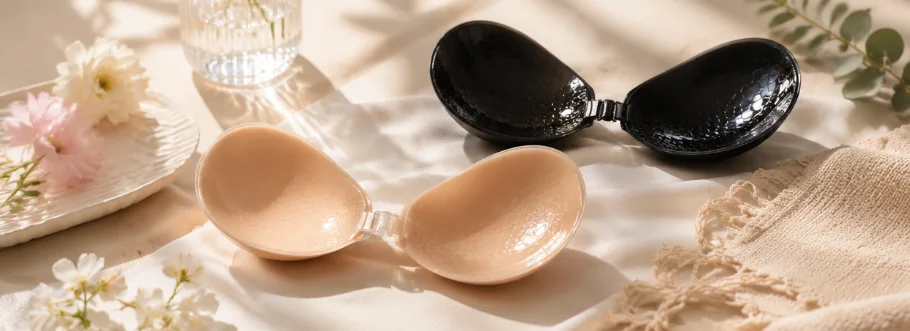
Air drying is the only recommended method. Never use a hairdryer, as intense heat can warp the silicone and dry out the glue. Avoid placing the bra in direct sunlight, which can lead to material degradation over time.
Once completely dry, immediately replace the protective plastic films. Dust is the silent killer of adhesive strength; even a small amount of household debris can render a portion of the cup useless. Storing the bra in its original packaging helps maintain its contoured shape and prevents it from being crushed.
If you notice a decline in performance, it may be due to “adhesive fatigue” caused by trapped oils. A deep clean can often revive the grip. However, all sticky bras have a finite lifespan. Premium versions are usually tested for high reusability, but environmental factors like extreme heat or improper storage can shorten this window.
For us, the focus is on creating durable solutions that withstand repeated wear. If a bra no longer sticks despite a thorough cleaning, it is likely that the adhesive has reached the end of its chemical effectiveness. At this point, replacement is necessary to ensure safety and support.
While some specialized “waterproof” versions exist, most standard sticky bras are not designed for heavy perspiration or swimming. Moisture getting between the skin and the adhesive will cause the bra to slide. If you are planning an event involving dancing or outdoor heat, look for designs with breathable centers or perforated silicone.
Sizing for adhesive lingerie often differs from traditional band-and-cup sizing. Because there is no back band to provide tension, the cup must do all the work. If the cup is too small, it won’t cover enough surface area to stay secure.
For plus-size individuals, selecting a bra specifically engineered for larger volumes is crucial. These designs often feature reinforced edges and a more robust adhesive application. Always refer to the specific manufacturer’s size chart rather than assuming your standard bra size will translate perfectly.
The cleaning and maintenance advice provided in this article is based on general material care knowledge and is for reference only. If you experience persistent skin irritation or have specific medical concerns regarding adhesives, please consult a dermatologist or a medical professional first.
Investing in a high-quality sticky bra means prioritizing materials that have undergone rigorous safety and durability testing. By following a strict maintenance routine—cleaning after every wear and storing away from dust—you can significantly extend the life of your garment. A well-maintained bra not only saves money but ensures that you are never caught off guard by a wardrobe malfunction when it matters most.
Source: Internal Testing Protocols and Material Safety Data, Dongguan Xinrui Underwear Co., Ltd.
Curious about our quality? Request your free samples of nipple covers and sticky bras today. As a dedicated manufacturer, we provide unbeatable factory-direct pricing and service to ensure your brand’s success.

Dsaky
INQUIRY