
Products

Finding a reliable waterproof sticky bra often feels like a gamble between comfort and physics. For many, the concern isn’t just about the initial fit, but how the adhesive reacts when introduced to sweat, humidity, or actual water. Understanding the mechanics behind modern adhesive lingerie helps in choosing a product that provides security without the risk of slipping at an inconvenient moment. This guide explores the technical aspects of waterproof adhesion and how medical-grade materials redefine what users can expect from strapless solutions.
The cleaning advice provided in this article is based on general material care knowledge and is for reference only. For any questions regarding skin sensitivities or specific dermatological reactions, please consult a medical professional or dermatologist first.
Standard adhesives often rely on simple chemical bonding that dissolves or loses friction when a layer of water or oil is introduced between the skin and the material. In a non-waterproof environment, the glue remains stable. However, as soon as the body begins to perspire, moisture acts as a lubricant. This lubrication reduces the coefficient of friction to nearly zero, causing the bra to slide.
A true waterproof sticky bra utilizes hydrophobic properties. Instead of absorbing water, the surface repels it, maintaining a dry contact point with the skin even in high-humidity environments. This is why material choice is the most critical factor in manufacturing these items.
High-quality adhesive bras typically use a combination of medical-grade silicone and specialized glues, such as those sourced from technical suppliers like Wacker. Silicone itself is naturally water-resistant. It does not swell or degrade when submerged, making it the ideal substrate for waterproof applications.
| Feature | Standard Adhesive | Medical-Grade Silicone Adhesive |
|---|---|---|
| Water Resistance | Low | Very High |
| Skin Compatibility | Variable | Hypoallergenic |
| Reusability | Limited | High (with proper care) |
| Breathability | Low | Optimized through thickness |
The adhesive layer applied to the silicone is where the “waterproof” magic happens. For us, the focus remains on ensuring the glue retains its viscosity under various temperatures. If the glue becomes too soft in the heat or too brittle in the cold, the bond fails. By using high-performance German or international adhesives, the bra creates a reliable seal that persists through sweat and swimming.
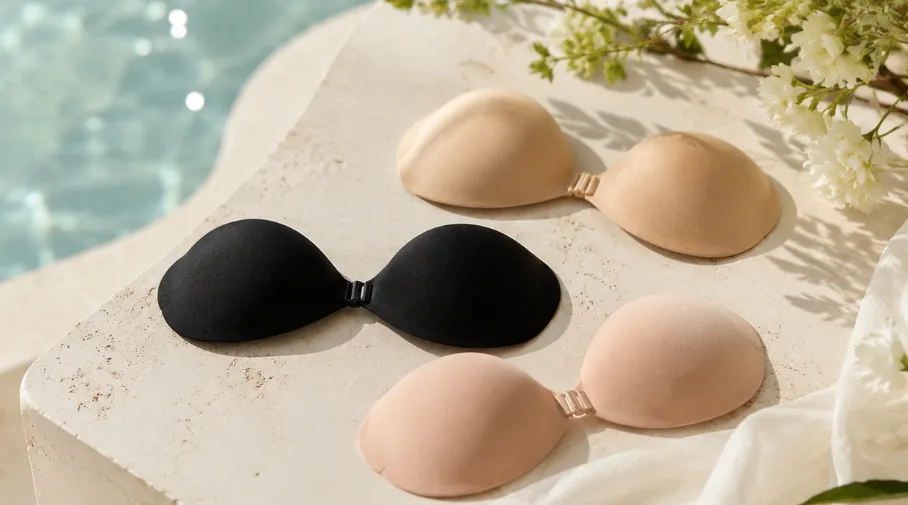
Adhesion in a wet environment isn’t just about the “stickiness” of the glue; it is also about suction and surface tension. When a silicone cup is pressed against the skin, it displaces air. If the edges are sealed properly, the atmospheric pressure helps hold the cup in place.
In a waterproof sticky bra, the edges are often tapered. This design ensures that water cannot easily find an entry point to break the vacuum. Once water gets under the edge, the weight of the water and the loss of suction will cause the bra to detach. A well-designed product prevents this through a graduated thickness that conforms perfectly to the body’s contours.
The demand for waterproof solutions extends beyond the pool. Users in tropical climates or those attending summer events require a bra that can withstand “insensible perspiration”—the constant, light sweat the body produces to stay cool.
To maintain the waterproof integrity of the adhesive, cleaning is mandatory after every use. Sweat contains salts and oils that, if left on the glue, will create a film that prevents the bra from sticking the next time.
Using a mild, oil-free soap is essential. Oils are the enemy of silicone adhesives. They break down the chemical bonds and permanently reduce the “tack” of the surface. After washing, the bra should be air-dried away from direct sunlight. Dust and lint are also significant factors; once the adhesive is dry, replacing the protective film ensures the surface stays pristine for the next use.
A common misconception is that a waterproof sticky bra will cause more sweating because it “doesn’t breathe.” While silicone is non-porous, the lack of movement and friction compared to a traditional bra often results in less irritation for many users. However, for those with extremely sensitive skin, the trapped moisture can occasionally lead to heat rashes.
Choosing a bra with a thinner center or perforated designs can help, though these sometimes compromise the waterproof seal. It is a balance between absolute security and maximum breathability.
Can I swim in the ocean with a sticky bra?
Yes, provided the bra is applied to clean, dry skin first. The bond must be established before the skin gets wet. Once the seal is formed, the hydrophobic nature of the silicone will keep it in place.
How do I know if my bra is still waterproof?
If the edges begin to lift even when dry, the adhesive is likely contaminated or worn out. A fresh, clean adhesive surface should feel slightly tacky to the touch and offer resistance when pulled from a flat surface.
Does sunscreen affect the stickiness?
Absolutely. Sunscreen, body lotions, and oils will immediately neutralize the adhesive. Always apply the bra to skin that has been cleaned with soap and water and is completely dry. Apply sunscreen only after the bra is securely in place, avoiding the edges.
How many times can I reuse it?
With meticulous care, a high-quality waterproof sticky bra can be worn 20 to 50 times. The longevity depends entirely on how well the skin oils and environmental dust are removed after each wear.
Maintaining a secure fit in challenging conditions requires a combination of high-grade materials and user discipline. By understanding how a waterproof sticky bra interacts with the skin, users can enjoy the freedom of backless and strapless fashion with total confidence.
Curious about our quality? Request your free samples of nipple covers and sticky bras today. As a dedicated manufacturer, we provide unbeatable factory-direct pricing and service to ensure your brand’s success.

Dsaky
INQUIRY