
Products

The invisible support of an adhesive bra provides unparalleled styling freedom under backless silk or plunging necklines. Yet, many women face a frustrating moment in front of the mirror, asking themselves: why is my sticky bra not sticking? This sudden loss of grip compromises outfit security, transforming a confidence-boosting garment into a source of constant anxiety. For us, the stability of the adhesive under mechanical stress is a primary focus. Understanding the molecular vulnerability of pressure-sensitive adhesives is the first step toward restoring that essential, reliable bond.
Medical-grade biological gel operates through high-surface contact, creating a secure bond with the skin. However, the human epidermis is a dynamic ecosystem, constantly secreting sebum, shedding dead skin cells, and producing perspiration. When these organic elements come between the skin and the silicone layer, they act as microscopic barriers, directly causing the breakdown of surface adhesion.
External pollutants present another significant threat to adhesive longevity. Environmental dust, fabric lint from storage drawers, and residual body lotions function like tiny contaminants, neutralizing the sticky properties of the gel. For individuals with larger busts, the physical demands placed on the adhesive are substantially higher. Without proper maintenance, gravitational pull and continuous skin friction will accelerate the degradation of the gel layer, rendering the bra ineffective far ahead of its expected lifespan.
Restoring a compromised adhesive layer requires a precise, scientific approach to cleansing rather than aggressive scrubbing. To wash your bra effectively, follow these structural steps:
Drying requires equal precision. Never use a towel, hair dryer, or direct sunlight. Towel fibers permanently embed into the gel, while intense heat degrades the underlying silicone structure. Instead, shake off excess water and place the bra adhesive-side up in a dust-free, indoor environment. This allows the biological gel to naturally regenerate its sticky properties as it air-dries.
Once dry, protecting the adhesive from airborne debris is crucial for maintaining prolonged performance. The original plastic protective film supplied with the packaging serves as the primary line of defense. Reapplying this film immediately after the bra dries prevents airborne dust and fabric fibers from settling on the delicate gel surface.
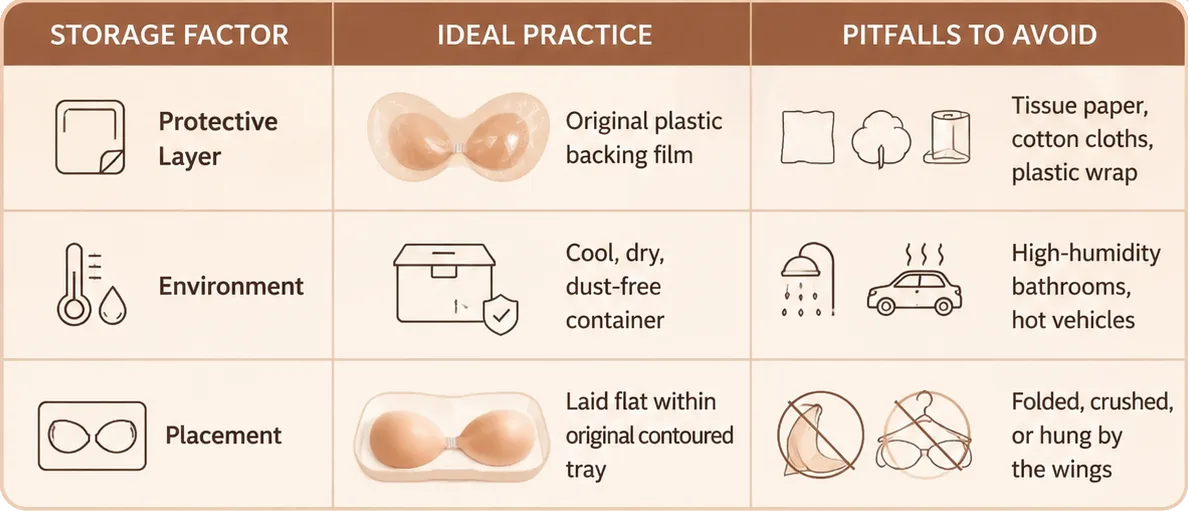
Store the protected bra inside its original molded packaging container. This preserves the structural integrity of the cups, preventing the deformation of the silicone mold under pressure. Keeping the bra away from high humidity and extreme heat ensures that the adhesive properties remain perfectly stabilized for your next wear.
Every high-quality adhesive bra, even those constructed with premium German Wacker adhesive, possesses a definitive operational lifespan. When the biological gel begins to flake, yellow, or crack, the material has reached structural exhaustion. If you notice that the bra shifts during normal movement despite meticulous cleaning, the adhesive polymers have degraded permanently. Recognizing these signs helps you avoid unexpected wardrobe failures.
When restoration steps no longer bring back the grip, investing in a fresh piece ensures your outfits remain effortlessly secured. If you frequently find yourself wondering why is my sticky bra not sticking, upgrading to a professionally engineered silicone solution will restore your styling confidence and peace of mind.
Curious about our quality? Request your free samples of nipple covers and sticky bras today. As a dedicated manufacturer, we provide unbeatable factory-direct pricing and service to ensure your brand’s success.

Dsaky
INQUIRY